
Your body already makes about 7,000 peptides.
WHAT ARE PEPTIDES?
Peptides Are Already Part of the Body.
Peptides are small messengers made of amino acids, the same building blocks that make proteins. Scientists have catalogued about 7,000 in the human body. Familiar ones include insulin, oxytocin, and endorphins. Some medicines are peptides too. Not every peptide is a treatment. Your physician decides what, if anything, is right for you.
Source: Stanford Medicine, 2026. View article (opens in a new tab)
Atoms form molecules. Some molecules are amino acids. Amino acids join together to form peptides, and longer chains form proteins. Many peptides carry signals that cells recognize. Those signals can influence how cells, tissues, and organs respond and work together.
Small molecules. Biological signals. Effects throughout the body.
Peptides, proteins, and signals. Peptides are short chains of amino acids joined by peptide bonds. Proteins usually contain longer chains folded into functional shapes. Some peptides act as messengers; others have different biological roles.
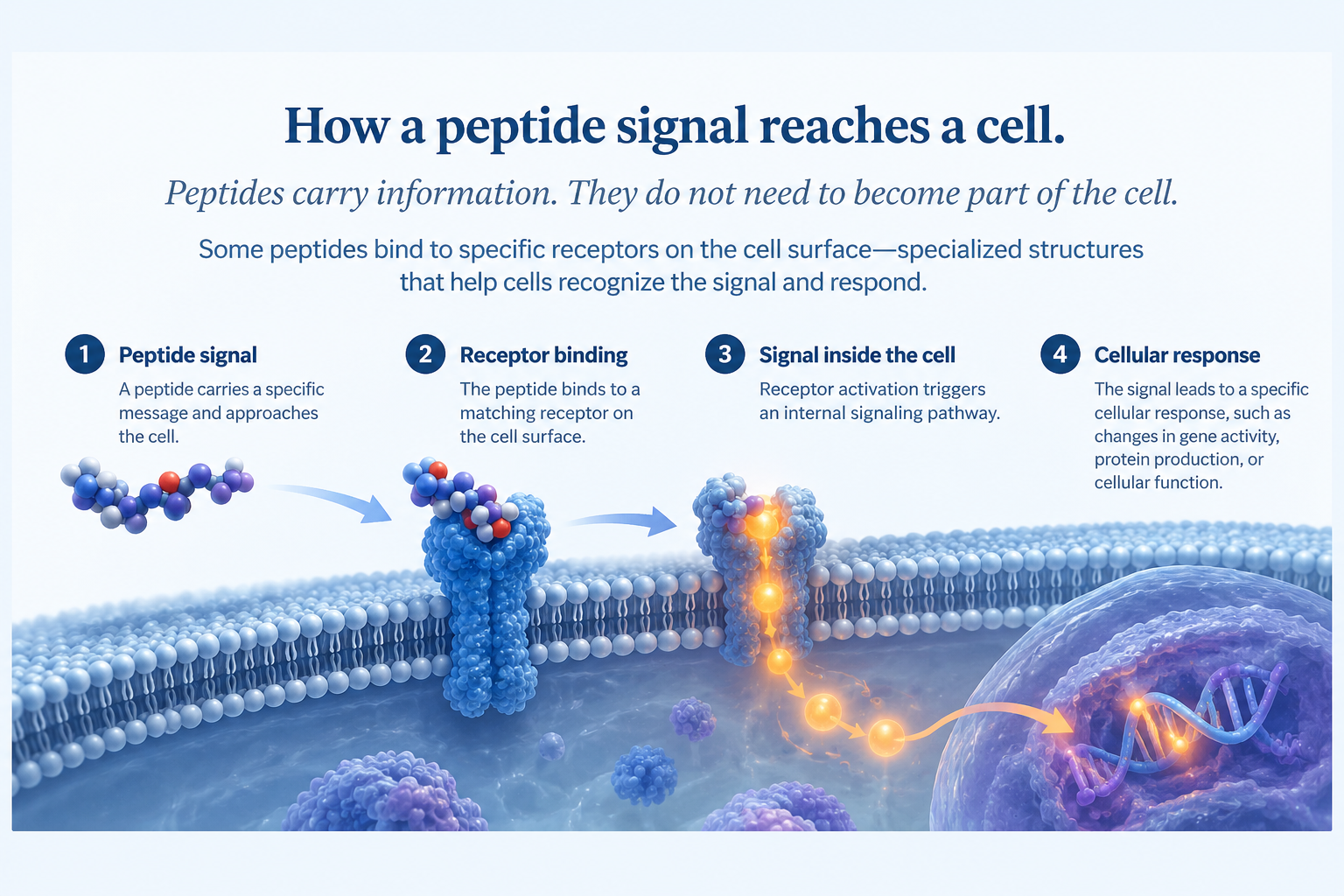
How a cell receives a message. A signaling peptide may interact with a compatible receptor, helping initiate a response inside the cell. Which cells respond depends on the peptide, the receptor, and the biological context.
Natural occurrence does not establish that a peptide product is safe or appropriate for treatment. Clinical decisions require independent medical evaluation.
Continue: How Peptides Work · Open the Glossary
Sources: NHGRI: Peptide; NHGRI: Protein; NIGMS: Hormones, receptors, and cell signals.
How small is a peptide?
Peptides are tiny. Size alone does not make a peptide safe or useful. Quality, dose, and medical judgment matter.
Compare peptides with atoms, proteins, mitochondria, cells, and a human hair.

A peptide can bind to a receptor on a cell. That binding can start a signal inside the cell. Different peptides bind different receptors. This is why peptides are studied for many goals, and why a physician looks at your whole picture before deciding.
ARE PEPTIDES SAFE?
Safety Depends on More Than the Peptide Itself.
FDA-approved peptide medicines have known safety profiles for their labeled uses. Many other peptides have little human safety data. Gray-market products sold as “research only” or “not for human use” are a different risk. One 2026 preprint (not peer reviewed) of 6,441 gray-market peptide samples reported that 41.6% failed basic purity or measured-dose standards.
Source: Mendias & Awan, 2026 preprint. View study (opens in a new tab)
At NPA, any medicine comes only after an independent physician writes a prescription, and only from a licensed U.S. pharmacy. Compounded drugs are not FDA approved. The FDA does not verify their safety, effectiveness, or quality the way it does for approved drugs.
Start With Your Goals
At NPA, you choose your priorities.
Tap your goals in order of importance. Tap again to remove.
More good years, lived well.
Healthspan • resilience • preserving function
Selected Goal
Domains
Choose a Goal to see the Domains most connected to it.
Listing is not a recommendation. An NPA network physician and you decide what is right for you.
Get Started →Your priorities go with you.
Behind every goal, five Domains work together.
Your Body in Five Domains
Why Domains? ▾
Domains group how the body works: fuel, energy, structure, balance, and brain-body signals. They help you learn. They are not diagnoses.
Select a Domain to see the biology behind it.
Metabolic Regulation
How your body manages fuel and nutrients.
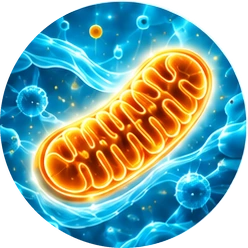
Cellular Energy
How your cells make usable energy.
Musculoskeletal Integrity
The structures that support strength and movement.
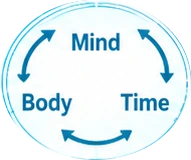
Homeostasis & Adaptation
Keeping internal balance while demands change.
Neurophysiological Integration
How your brain coordinates body functions.
A Clear Path to Care
Four steps. You stay in control. Your physician practices medicine. NPA coordinates.
- LearnExplore goals, Domains, and the peptide library.
- Request a visitShare your name, contact info, and mailing address.
- Meet your physicianAn independent licensed physician in the NPA network reviews your history, may order labs, and decides with you. Their office collects your medical information, not NPA.
- Pharmacy, if prescribedA licensed U.S. pharmacy fills the prescription and ships to you when legally permitted.
Ready When You Are
Request a visit. Your physician’s office will send a secure intake form. Medical history goes to them, not to NPA.