Your body needs the right fuel, available when it is needed.
Learn MoreShow Less about Human Function
Whether you are walking, thinking, eating, or sleeping, your body continually adjusts how it obtains, stores, and uses fuel.
Digestion breaks food into nutrients—including glucose, fatty acids, and amino acids—which are absorbed and made available to your tissues. Your liver, muscles, and fat tissue help process or store these resources, while hormones such as insulin and glucagon help coordinate when fuel is stored and when it is released.
After a meal, your body shifts toward using incoming nutrients and replenishing reserves. Between meals and during activity, it adjusts fuel availability to meet changing demands.
Metabolic Regulation is this ongoing coordination of fuel supply, storage, and use.
Key Organs & Tissues
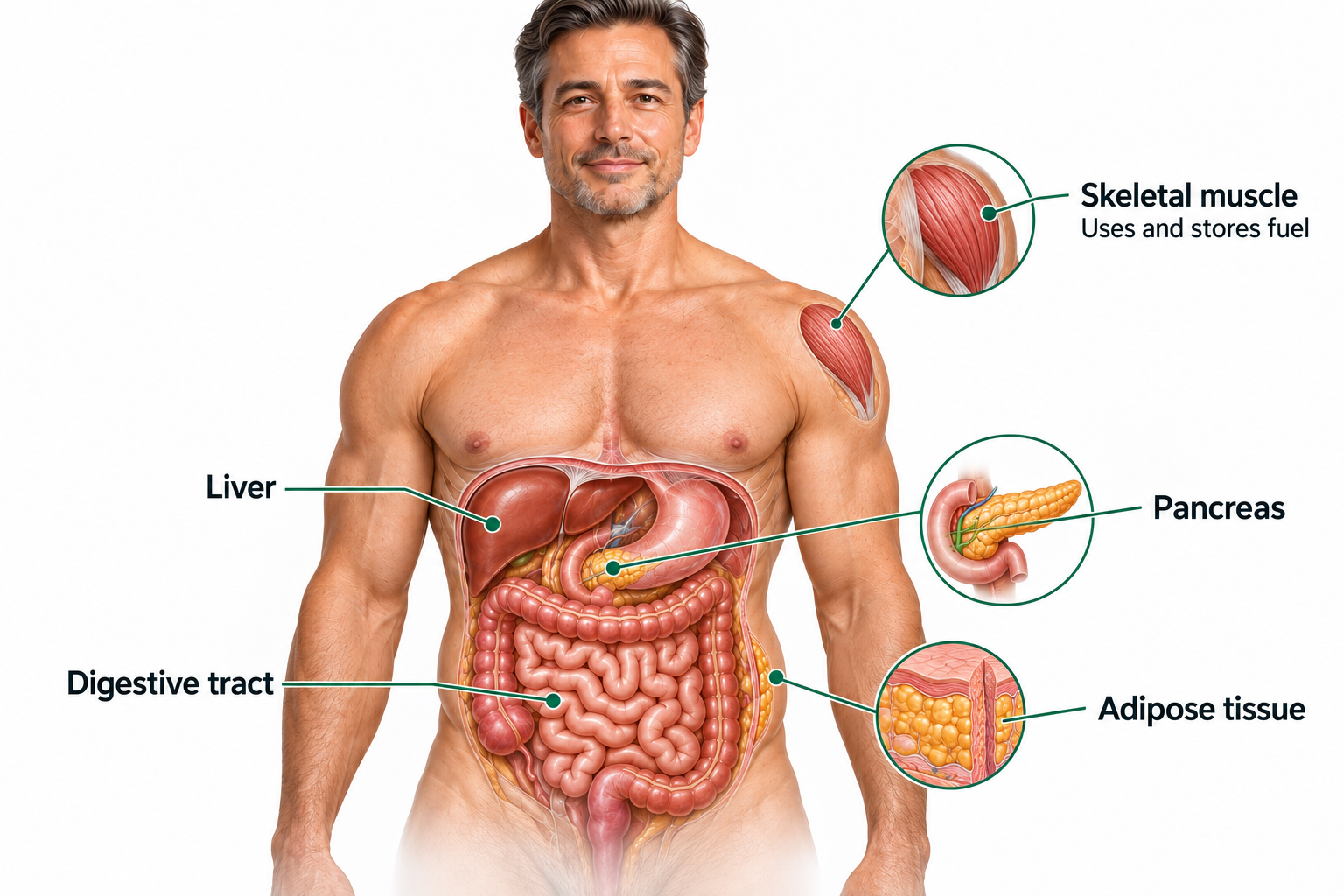
Your body manages fuel through a coordinated network.
Learn MoreShow Less
Digestive Tract — Bringing Nutrients In
Your stomach and intestines break food into smaller components.
Most nutrient absorption occurs in the small intestine, where nutrients enter the blood or lymph for transport to your tissues.
After meals, your intestines also release hormones such as GLP-1 and GIP, which signal the pancreas and help regulate appetite and blood glucose.
Pancreas — Signaling When to Store or Release
Your pancreas releases insulin and glucagon in response to changing conditions.
Insulin helps coordinate nutrient use and storage after meals. Glucagon helps your liver maintain blood glucose between meals by releasing stored glucose and making additional glucose when needed.
Liver — Processing and Distributing Fuel
Your liver processes incoming nutrients and helps maintain a steady supply of fuel.
It stores glucose as glycogen and can release glucose between meals. It also processes fats and amino acids, adjusting its activity in response to hormonal signals.
Skeletal Muscle — Using Fuel for Movement
Your muscles use glucose and fatty acids to support activity.
They also store glycogen for their own use. Both insulin and muscle contraction help regulate glucose uptake, connecting movement directly with metabolic regulation.
Adipose Tissue — Storing Energy and Sending Signals
Your fat tissue stores energy mainly as triglycerides and releases fatty acids when needed.
It also produces signals, including leptin, that help communicate the state of your energy reserves to the brain.
Disruptors
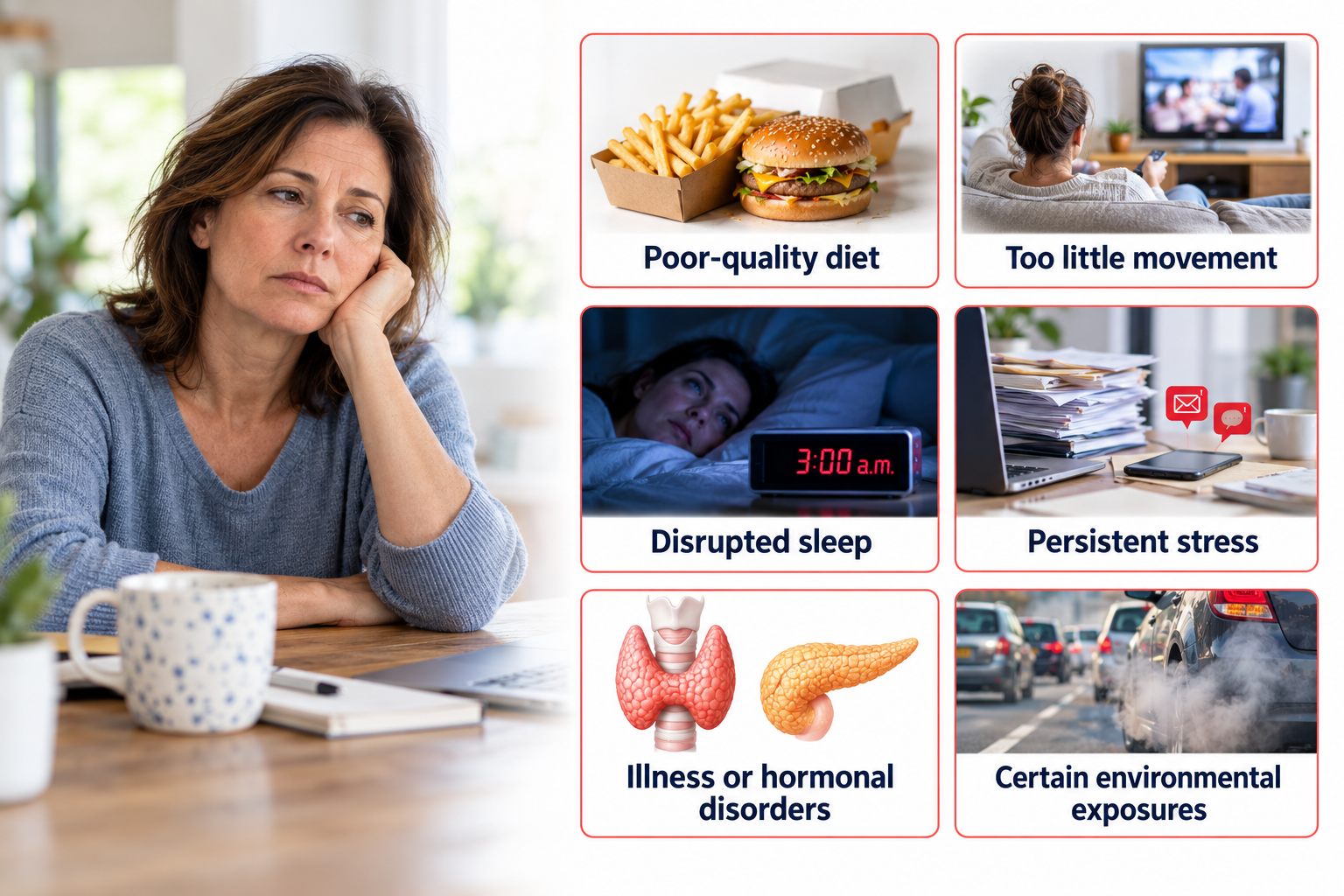
Select a disruptor to understand how it affects metabolic regulation.
A Persistently Poor-Quality Diet
A pattern high in added sugars and highly processed foods can make it easier to consume more energy than your body needs.
Over time, excess energy intake can increase fat storage and contribute to impaired insulin sensitivity. The overall dietary pattern matters more than one food or meal.
Too Little Movement
Prolonged inactivity reduces muscular fuel demand and can impair insulin responsiveness.
Your muscles are a major destination for glucose. Prolonged inactivity reduces the demand for muscular fuel and can make your tissues less responsive to insulin. Regular movement helps connect available fuel with its use.
Disrupted Sleep and Body Rhythms
Short or irregular sleep can affect insulin sensitivity, appetite signals, and the timing of food intake.
Your internal clock helps coordinate metabolism; repeated disruption can make that coordination less effective.
Persistent Stress
Stress hormones, including cortisol and adrenaline, help make fuel available for immediate demands.
When stress is prolonged, changes in these signals—along with disrupted sleep or eating patterns—can interfere with glucose regulation and energy balance.
Illness or Hormonal Disorders
Conditions affecting insulin, thyroid hormones, or other regulatory systems can change how your body processes and uses fuel.
These changes require clinical evaluation; fatigue, appetite changes, or weight changes alone do not identify their cause.
Certain Environmental Exposures
Some pollutants and chemicals can interfere with hormonal signaling or metabolic processes.
Effects vary with the substance, amount, timing, and duration of exposure. Specific exposures deserve specific explanations, rather than a general label of “toxins.”
Understanding Metabolic Disruptors
Your metabolism adjusts to meals, movement, sleep, and stress. A disruptor is an influence that disrupts this regulation or places demands on the system beyond its ability to compensate. The effect depends on its intensity, duration, and your individual circumstances.
Recognizing a possible disruption is a starting point for understanding—not a diagnosis or a reason to select a peptide on your own.
Physiology
From your next meal to your next move, your body keeps fuel available.
Learn MoreShow Less
1. Break Down and Absorb
Your digestive tract breaks food into glucose, fatty acids, and amino acids, and absorbs them into the blood.
2. Signal Fuel Arrival
As nutrients rise, your pancreas releases insulin, signaling your tissues to take in fuel.
3. Use What Is Needed
Your muscles and other tissues use fuel for immediate demands.
4. Store a Reserve
Your liver and muscles store glycogen; your fat tissue stores energy mainly as triglycerides.
5. Release Fuel Between Meals
Glucagon signals your liver to release glucose, and your fat tissue releases fatty acids.
6. Adjust to Changing Demands
Feedback signals keep adjusting supply as meals, activity, sleep, and stress change.
Metabolic regulation is not a fixed sequence. These processes overlap continuously as meals, activity, rest, stress, and other demands change.
Peptides Studied
Explore peptide research connected with appetite, fuel regulation, and metabolic signaling.
Semaglutide
Activates the GLP-1 receptor, a signaling pathway involved in appetite and blood-glucose regulation.